Prevention vs. Cure: New Research Quantifies the Value of Controlled Burning
- Rob Beeson

- Dec 2, 2025
- 3 min read

A new study has conducted a rigorous financial analysis of prescribed burning. While the research focuses on the shrublands of South Africa, the principles regarding fuel load and wildfire risk are universally relevant.
Here is a summary of the findings and what they mean for land stewardship.
The Study: Measuring the Cost of Safety
Researchers from Stellenbosch University set out to answer a simple financial question: Does it make economic sense to use prescribed fire to manage vegetation?
To find the answer, they compared two groups of land managers in the Langeberg Mountain region: those who actively used controlled burning to reduce fuel loads, and those who practiced fire suppression (no burning).
They then analysed the direct costs of the burning operations against the financial losses caused by wildfires, such as damage to fences, livestock, and loss of income.
Key Finding: Prevention Pays
The results were stark. The study concluded that the benefits of prescribed burning overwhelmingly outweigh the costs of implementation.
Using a Cost-Benefit Analysis (CBA), the researchers established a ratio of 16.3 to 1.
In plain English, this means that for every unit of currency spent on the careful planning and execution of a controlled burn, the land manager saved over 16 times that amount by avoiding the catastrophic damages associated with wildfires.
The High Price of Wildfire
The study highlighted the severe financial consequences of allowing vegetation (fuel load) to build up unchecked. When wildfires did occur, the difference in damage between managed and unmanaged land was significant.
24 Times Higher Damage: The total financial damage experienced by farmers who did not use controlled burning was twenty-four times higher than those who did.
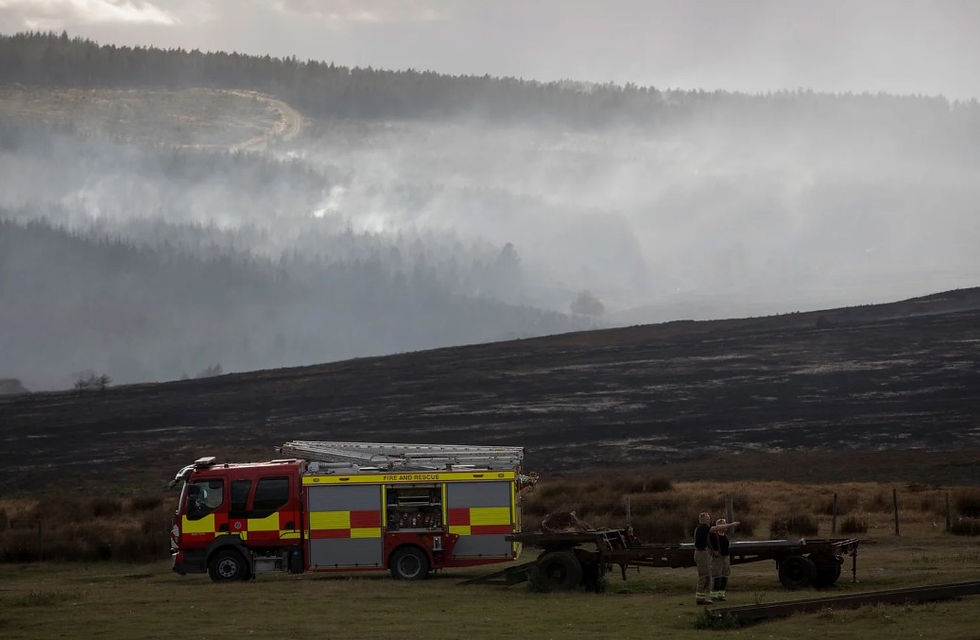
Catastrophic Losses: On unmanaged land, wildfires burned hotter and more intensely due to the buildup of dry vegetation. This resulted in massive losses, including the destruction of entire crop plantations and critical infrastructure like fencing.
By contrast, on land where prescribed burning was used, wildfires were more manageable, and damages were minimal.
The Barrier: Fear of Liability
Despite the clear economic and safety benefits, the researchers found a worrying trend: 69% of the farmers surveyed did not use controlled burning.
The primary reason was not a lack of belief in the method, but fear. Many land managers cited the fear of legal liability and litigation should a controlled fire escape. This "paralysis by regulation" resulted in a dangerous accumulation of fuel on the land - a "ticking time bomb" awaiting a spark.
The authors of the paper argue that this fear is counter-productive. They suggest that regulations should be adapted to support land managers who are trying to reduce wildfire risk, rather than penalising them.
Relevance to Moorland Stewardship
While this study was conducted overseas, the lessons for our own uplands are clear.
Fuel Management is Critical: Just as in the South African shrublands, old, dry heather on our moors acts as a potent fuel source. Prescribed burning breaks up this fuel load, creating firebreaks that protect rural communities and wildlife.
Economic Security: For hill farmers and estates, the cost of a wildfire goes beyond the immediate loss of grazing. It involves the destruction of miles of fencing, loss of livestock, and long-term damage to the peat and soil. This research confirms that "cool," controlled burns are a cost-effective insurance policy against these losses.
Conservation Value: The study noted that controlled fires rejuvenated vegetation, improving grazing quality. This mirrors our experience on the moors, where burning in rotation supports a mosaic of habitats beneficial to ground-nesting birds and pollinators.
Conclusion
This scientific research reinforces the value of traditional land management techniques. It demonstrates that prescribed burning is a vital tool for preventing the environmental and economic devastation of high-intensity wildfires. By managing the land proactively, we protect not only our livelihoods but the very habitats we cherish.
The Takeaway
Managing vegetation through prescribed burning is statistically 16 times more cost-effective than dealing with the aftermath of a wildfire, proving that proactive stewardship is the best defence for our rural communities.
Stay Informed
📧 Keep updated on all moorland issues - sign up for our FREE weekly newsletter.