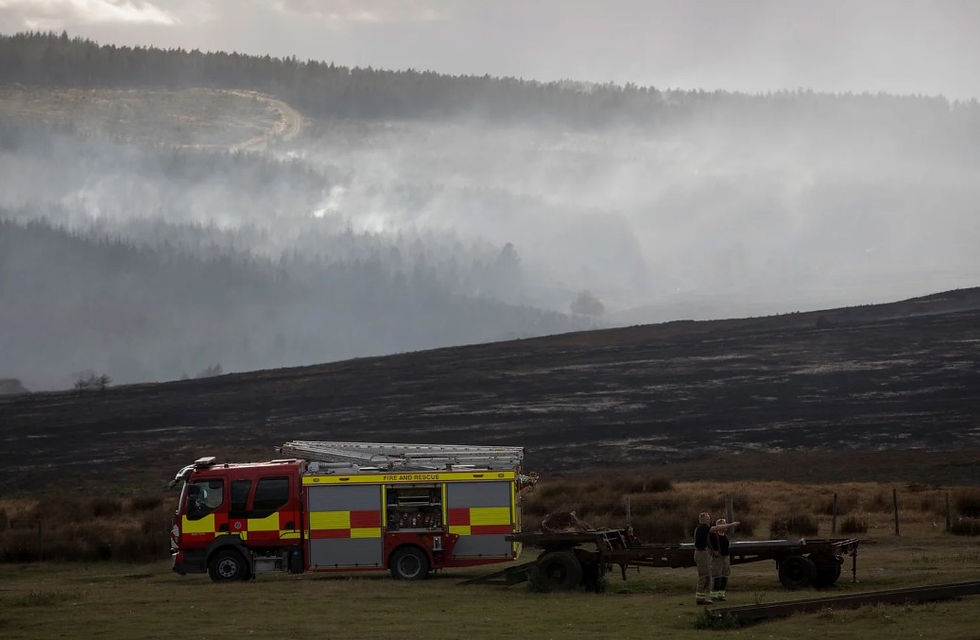
Study Reveals How Daily Moisture Changes Shape Wildfire Risk
- Rob Beeson

- Dec 1, 2025
- 3 min read

Paper: Diurnal fuel moisture content variations of live and dead Calluna vegetation in a temperate peatland
A groundbreaking study from the University of Birmingham tracked heather moisture hour by hour across six months in the North York Moors. What they found challenges how fire risk across Britain's uplands is assessed.
The Study: 554 Hours of Watching Heather Dry
Between March and August 2022, researchers collected samples every hour from 10am to 6pm on dry days, precisely when fires are most likely to start. They measured moisture in:
Live heather (Calluna vulgaris)
Dead heather stems
Surface moss and litter
Organic peat beneath
Each sample was weighed, dried, and analyzed to track exactly how much moisture the vegetation was losing as the day progressed.
What They Discovered
Dead Heather: The Ticking Time Bomb
Dead heather stems lose moisture rapidly throughout the day, becoming increasingly flammable as afternoon approaches. This pattern was most extreme in March, June, and August, exactly when UK moorland fires peak.
Live Heather: More Variable Than Expected
Even living plants showed significant moisture swings, especially in early spring when:
Frost damage leaves plants stressed
Frozen soils prevent roots from drawing water
Winter dieback hasn't fully recovered
By afternoon on a dry March day, live heather can become nearly as flammable as dead material.
Surface Fuels Cross Critical Thresholds
Moss and litter showed something startling: their moisture levels sometimes dropped below ignition thresholds during the driest afternoon hours, then rose back above them by evening.
This means the same patch of ground could be unburnable at 10am but ready to ignite at 3pm.
The Weather Paradox
These daily moisture swings weren't strongly linked to temperature or humidity. Only moss showed any clear connection to weather variables.
This suggests something fundamental about how heather vegetation dries, and it means our weather-based fire danger models might be missing the mark.
The Seasonal Story
Spring: Maximum Danger Zone
March brought the lowest live moisture levels of the entire study period. Winter damage plus frozen ground creates a perfect storm of fire risk, even though we think of spring as "wet season."
Early Summer: The Green-Up
From April to June, live heather moisture surged by over 50% as new growth emerged and plants recovered, providing a window of relative safety.
Late Summer: Risk Returns
By August, even though overall moisture was higher than spring, the daily swings remained dramatic enough to push fuels into flammable ranges during afternoon hours.
Why This Matters Right Now
Current Fire Risk Models Are Incomplete
Most UK wildfire risk assessments use single daily measurements, often taken in the morning. This study shows they could be dramatically underestimating afternoon fire risk.
It's like checking the weather at breakfast and assuming it won't change by dinner.
Climate Change Is Shrinking the Safety Window
UK climate projections forecast:
2.5°C average temperature rise by 2050
Hotter, drier summers
More frequent droughts
As temperatures climb, fuels will drop below ignition thresholds more often and for longer periods each day. The afternoon danger window could expand into morning and evening.
Timing Is Everything
This research has immediate practical implications for:
Controlled burning: Schedule burns for morning hours when moisture is highest and avoid afternoons when conditions can deteriorate rapidly.
Fire monitoring: Increase vigilance during peak risk hours (afternoon) in peak risk months (March, June, August).
Fuel management: Target areas with heavy dead heather accumulation - it's the most responsive to daily drying and the quickest to ignite.
Firefighting response: Understand that a "safe" morning assessment could be dangerously outdated by mid-afternoon.
The Bottom Line for Land Managers
A moor's fire risk isn't just seasonal - it's hourly. The same vegetation that seems safe at breakfast could be primed to burn by lunch.
By understanding these daily moisture rhythms, you can:
Time your management interventions more effectively
Monitor during the hours that actually matter
Allocate firefighting resources where and when they're needed most
Make evidence-based decisions about access and activities on high-risk days
The heather on Britain's moors has always dried out during the day. But we've never measured it systematically at this resolution before. Now that we have, we can't ignore what the data is telling us.
Fire risk on moorland changes with the clock. Our management strategies need to do the same.