What the Covid Inquiry Teaches Us About Moorland Policy
- Andrew Gilruth

- Dec 4, 2025
- 3 min read

The publication of the latest Covid-19 Inquiry report has stirred up a familiar mix of frustration and wake-up calls. After more than £200 million spent, countless hearings and reams of WhatsApp messages, what has emerged is a pattern anyone working in the uplands will recognise.
Journalist Fraser Nelson, writing in The Times, described how, during his examination of then-Health Secretary Matt Hancock’s WhatsApp exchanges, ministers and officials began with caution and open-mindedness, but slid into tribalism. Anyone asking awkward questions was mocked or marginalised. The space for challenge closed.
If that sounds familiar to those of us managing moorland landscapes, it’s because the same dynamic is playing out in our policy world. The Covid Inquiry’s findings reveal what happens when difficult questions are ignored. Mistakes remain uncorrected, assumptions harden into dogma and policy becomes theatre rather than a process of learning.
A Pattern of Silencing Debate
And this is exactly what’s happening in the uplands.
In our recent blog - Natural England and Wildfire Risk: A Call for Transparency and Open Dialogue - we highlighted how Natural England’s internal communication appears to caution staff not to respond to external queries about wildfire risk, fuel load or land-management techniques.
The effect presents a public body suppressing conversation exactly when the risk is changing fast. At the very time fuel loads are growing and both fire services and land managers are crying out for clarity.
Science advances by conjecture and refutation, by open debate and revision. In wildfire policy, as in pandemics, that means putting ideas to the test. Establishing what works, what doesn’t, what are the uncertainties?
Instead, we too often get simplistic narratives. Burn bans here, peat-depth thresholds there. But no honest conversation about the trade-offs, practicalities or failure points. And when stakeholders raise legitimate concerns, the response is silence or “we cannot comment”.
The uplands aren’t remote from public safety, they are part of it. When fuel builds up, access is poor and water tables drop. It’s not just grouse or habitat that’s at risk, it’s communities, the fire service and the wider rural economy. Yet policy continues to treat moorland as if it were a benign museum piece rather than a fire-prone ecosystem.
Controlled burning, long a core tool for reducing fuel loads and creating fire-breaks, is treated by some as a relic. Meanwhile, the 10cm peat-depth rule enforced through new stewardship agreements by Natural England glides into policy as if it were a science-based axiom rather than a judgement call.
The Dangers of a Closed Mindset
The inquiry into Covid shows us the danger of that mindset. When inquiry participants are discouraged, when questions are labelled inconvenient and debate shut down, you get unintended consequences.
In the uplands, that could mean greater wildfire risk, greater smoke risk for towns and villages, degraded habitats and a public scrutiny crisis for land managers who have been doing the frontline work all along.
If we are serious about protecting peatlands, safeguarding wildlife and reducing wildfire risk, we must demand policy that listens, really listens, to those who know these landscapes intimately. Not because they have all the answers, but because they live with the complexity, day in and day out. Silence in the face of questioning does not protect reputation; it erodes trust and invites failure.
Policy making is at its strongest when it engages confidently with external questions, even where views differ. Coordinated communications are fine, but when the message is “don’t engage” you’re not managing risk - you’re managing fear of scrutiny.
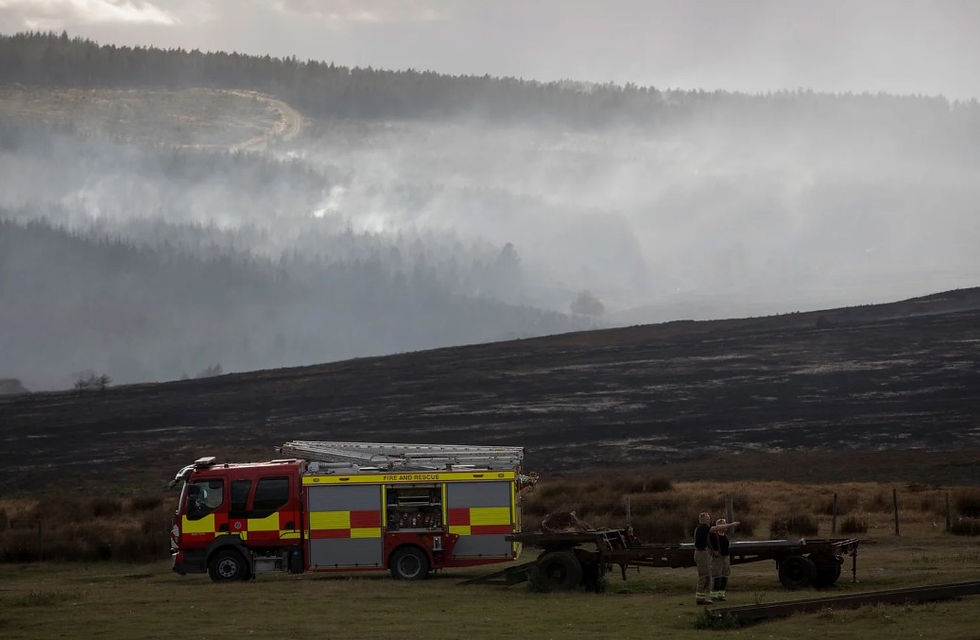
During the pandemic, the cost of shutting out uncomfortable voices was counted in lives and lockdowns. In the uplands, the cost may not yet be counted, but it is real. In burned moors, in smoke-filled skies, in wildlife decline and in the shrinking margin for match-day access for fire crews.
We can’t afford the same mistake twice. If the Covid inquiry has taught us anything, it’s this. Good policy requires curiosity, openness and the willingness to revise. Our moors deserve no less.
This article first appeared in Shooting Times
Stay Informed
📧 Stay Updated on All Moorland Issues: Sign Up for Our Free Newsletter.