The Sound of Silence: Why Active Moorland Management is Vital for Wildlife

Updated: Jan 13
What does a healthy moorland sound like? For Jeremy, a gamekeeper in the Southern Uplands, it’s the piercing call of the Curlew, the aerial display of Lapwings, and the sight of Redshanks - a landscape teeming with wildlife.
Now, imagine the opposite: a profound and unsettling quiet, the sound of an ecosystem in retreat, a silence that tells a story of decline.
For Jeremy, this stark difference isn't a matter of opinion; it's an audible measure of success or failure in conservation, and it forms the heart of a crucial debate about how we care for our most precious landscapes. His experience provides a powerful, firsthand perspective on what works. As he puts it, the difference is undeniable:
"If you go into a non-keeper ground, I mean you'll not see... half of the wildlife."
This isn't just a general observation. Jeremy’s return to Langholm Moor, a landscape where he once worked and where active management has since ceased, provides a sobering and powerful case study that turns theory into tangible reality.
From Symphony to Silence: A Keeper's Return to Langholm
To truly understand the impact of gamekeeping, there is no substitute for direct comparison. By contrasting the thriving ecosystem of his managed home moor with the current state of the unmanaged Langholm Moor, Jeremy provides a clear, real-world demonstration of two profoundly different conservation outcomes.
His visit to Langholm, now operating as the Tarras Valley Nature Reserve, wasn’t just a trip down memory lane; it was a stark audit of what happens when a proven management system is removed.
The contrast he observed was immediate and profound.
The Managed Moor: A Symphony of Waders
On his home ground in the Southern Uplands, life is abundant. Jeremy describes his daily experience as one filled with nature. It’s common to see "20 odd lapwings" in the fields, alongside Redshanks, all while the distinctive call of the Curlew provides a constant background soundtrack. This is the sign of a balanced habitat, where vulnerable species are given the chance to flourish.
The Unmanaged Reserve: An Eerie Quiet
His arrival at Langholm Moor, a place he remembers as being full of life, was met with an unnerving stillness. He describes it as "surprisingly quiet," noting that upon arrival, "there's not a thing." Throughout his time there, the absence of the bird calls he is so accustomed to was palpable. As he sat and listened, he remarked, "I've not heard a thing." This sensory evidence was backed up by what he could - and couldn't - see.
"We definitely see no Curlews, no Lapwings, no Redshanks... compared to back home."
This direct observation of decline is not a mystery. It is a predictable outcome, backed by hard data from the years immediately following the cessation of active gamekeeping on the moor.
More Than a Feeling: The Hard Data of Decline
The story of Langholm Moor is critically important because it serves as a real-world experiment. This landscape is not just any piece of land; it is a designated Site of Special Scientific Interest (SSSI) and a Special Protection Area (SPA).
The data from its time under active management versus its current state provides undeniable proof of the consequences of removing gamekeepers.
When keepers actively managed the moor, its success as a habitat for protected species was remarkable.
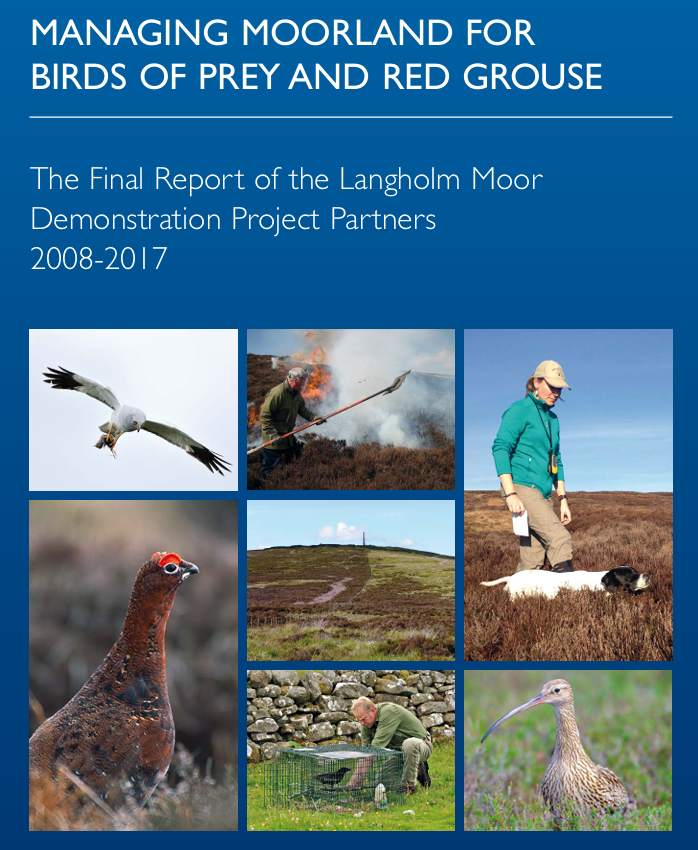
Hen Harrier Success: Under keeper management, Langholm Moor supported 11 Hen Harrier nests.
Fledgling Numbers: From these nests, a staggering 43 young successfully fledged.
This success story took a dramatic turn the very first year the keepers left. The RSPB's own video footage captured a fox entering a Hen Harrier nest and killing the chicks. This single, documented event is a powerful illustration of what happens when predator numbers are left uncontrolled.
Crucially, Langholm’s SPA designation was granted specifically for its Hen Harrier population. The purpose of that legal protection is to ensure the conservation of this iconic raptor.
To abandon the very management that delivered nationally important numbers of Hen Harriers is to risk failing the site’s core ecological and legal objective. It powerfully refutes the idea that simply letting go is a valid conservation strategy for a designated site.
On his recent visit, the wildlife Jeremy did see tells its own story: "three short-eared owls" and, most tellingly, "Endless Carrion Crows." The landscape is now dominated by predators and generalist species, while the vulnerable, ground-nesting birds it was famous for have all but vanished. This explosion in Carrion Crows and the loss of Harrier chicks point to a single, critical missing element: active predator management.
The Unseen Guardian: Why Balance Requires Intervention
Predator management is a core, and often misunderstood, function of gamekeeping. At its heart, it is a comprehensive system of environmental management. This is not about eliminating predators from the landscape, but about managing their numbers to create a sustainable balance. In this balanced ecosystem, vulnerable and sensitive species, particularly ground-nesting birds, are given a fighting chance to breed and raise their young successfully.
Without management, the odds are stacked against them. Birds like the Curlew, Lapwing, and Golden Plover, which nest on the open ground, are exceptionally vulnerable. An unchecked population of generalist predators - including foxes, crows, stoats and weasels - will systematically prey on their eggs and chicks, leading to devastating population crashes.
The decline at Langholm is not an unfortunate anomaly; it is the predictable and scientifically understood outcome when predator populations are left unchecked. It serves as a stark, real-world refutation of the hands-off conservation model. This crucial work is what allows biodiversity to thrive, but it is only one half of a keeper’s role. The other is managing the habitat itself.
A Ticking Time Bomb: Wildfire Risk on Unmanaged Land
Effective moorland management extends beyond the fauna to the flora. A keeper’s expertise is essential not just for protecting wildlife, but for safeguarding the entire habitat from the catastrophic threat of wildfire. This is an issue of immense strategic importance, as a single fire can destroy decades of conservation work in a matter of hours.
The problem begins when heather is left unmanaged. It grows old and "rank," becoming dense, woody, and overgrown. This creates a vast and continuous fuel load across the landscape, effectively turning the moor into a tinderbox.
Under these conditions, the risk of a major wildfire escalates dramatically. All it takes is a single spark - from a carelessly discarded barbecue for instance - combined with a period of dry weather and wind. The result can be a "devastating wildfire" that incinerates the precious peatland soil and destroys the very habitat the Tarras Valley Nature Reserve project aims to protect. As Jeremy notes, such an event would render the entire effort a "total, total waste of time."
The solution is proactive habitat management. Through controlled burning, also known as "muirburn" or prescribed burning, keepers carefully break up the swathes of rank heather. This creates a mosaic of different-aged vegetation and establishes natural firebreaks, which make any potential wildfire smaller, less intense, and far easier to control and extinguish. Active management protects both the birds and the home they depend upon.
For Thriving Wildlife, We Can't Just Leave Nature Alone
The evidence is clear, and it can be heard in the vibrant sounds of a managed moor and the profound silence at Langholm. The contrast between these two landscapes delivers an unambiguous verdict on the importance of active, skilled land management, revealing that a passive, hands-off approach is not a guaranteed route to ecological success.
The belief that we can simply "leave nature alone" and expect it to thrive is a dangerous gamble. The evidence from Langholm demonstrates that this approach can lead directly to biodiversity loss, failure to meet conservation obligations, and increased ecosystem risk from wildfire. Predator control and habitat management are not optional extras; they are the essential pillars of successful conservation.
For our moorlands to be resilient, vibrant, and full of life, they require care. The skilled, evidence-based work of gamekeepers is a proven method for delivering what we all want: thriving wildlife populations and healthy, resilient moorland ecosystems for generations to come.
Stay Updated
📧 Keep updated on all moorland issues - sign up for our FREE weekly newsletter.