
A Wake-Up Call at Danes Moss: Why Rewetting Alone Cannot Prevent Wildfires

KEY TAKEAWAY: The wildfire at the Danes Moss Nature Reserve serves as a stark reminder of a reality that land managers have long understood: simply rewetting a landscape is not a guaranteed, standalone solution for preventing wildfires.
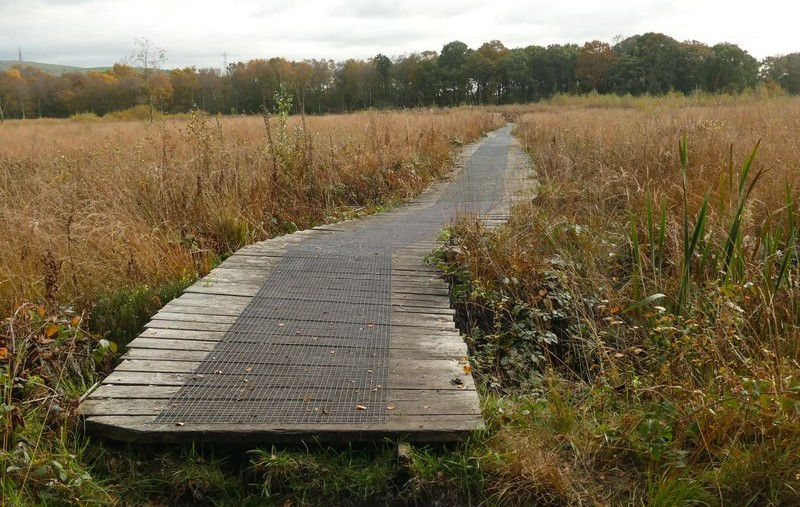
On Tuesday, 10th March, a blaze swept through roughly 2,500 square metres of the Danes Moss Nature Reserve near Macclesfield. Crucially, the reserve is the largest lowland raised bog in Cheshire. It is a fundamentally wet environment. Yet, despite its hydrology, the site still suffered a dangerous wildfire.
This incident clearly demonstrates that relying solely on moisture levels or "rewetting" strategies leaves our most vulnerable habitats exposed. When surface vegetation dries out, it becomes a highly flammable fuel load, regardless of how wet the ground is beneath it.
The Incident at Danes Moss: What Happened?
Thanks to the rapid intervention from a member of the public and the swift, professional response from the fire service, a much wider disaster was averted.
Based on an update from the Cheshire Wildlife Trust, here are the key facts regarding the incident:
The Scale: The fire covered approximately 2,500 square metres of the reserve.
The Response: Four fire engines and an all-terrain vehicle arrived at roughly 5:00 pm, with crews remaining on site for two hours to dampen down hot spots.
The Damage: The fire rapidly burned through surface vegetation, including grasses, heather, and bramble. A section of the boardwalk was also damaged.
The Cause: The blaze is believed to have been caused by unintentional arson due to carelessness.
The Relief: Fortunately, because the fire was caught early, it did not penetrate down into the underlying peat.
The Myth of "Too Wet to Burn"
Danes Moss is a Site of Special Scientific Interest (SSSI) and, as the reserves manager rightly points out, one of the scarcest and most threatened habitats in the UK. It is home to diverse species, from dragonflies to common lizards.
However, the fact that a fire of this scale could ignite and spread across the surface of a lowland raised bog dismantles the persistent myth that wet peatlands are immune to wildfire.
While rewetting is a valuable tool in peatland restoration, it does not magically eliminate the risk of fire. Grasses, heather, and brambles naturally grow on these sites. During dry spells, or even just breezy spring days, this top layer of vegetation dries out rapidly.
Without using active management technqieus such as controlled burning to reduce this fuel load, a single careless spark - like the one at Danes Moss - can ignite a blaze that spreads rapidly across the surface.
The Need for Comprehensive, Active Management
The near-miss at Danes Moss should serve as a pivotal learning moment for policymakers, stakeholders, and the public.
If the fire brigade had not been alerted so quickly, the surface fire would have burned hotter and longer, eventually baking the moisture out of the top layer of peat and igniting the carbon-rich soil beneath. Once peat catches fire, it is notoriously difficult to extinguish, releasing vast amounts of carbon and destroying centuries of ecological development.
To truly protect our rare peatlands and moorlands, we cannot rely on a single, passive strategy. We must embrace a comprehensive "toolbox" approach to land management.
This must include active measures to manage and reduce surface fuel loads, creating fire breaks, and ensuring that when the inevitable careless spark occurs, the landscape is genuinely resilient enough to stop it in its tracks.
Rewetting is part of the puzzle, but as Danes Moss has shown us, it is far from the whole solution.
Stay Updated
📧 Keep updated on all moorland issues - sign up for our FREE weekly newsletter.


