
Bigger Fires, Stretched Crews: 2026 Breaks England's Wildfire Records, New Data Shows

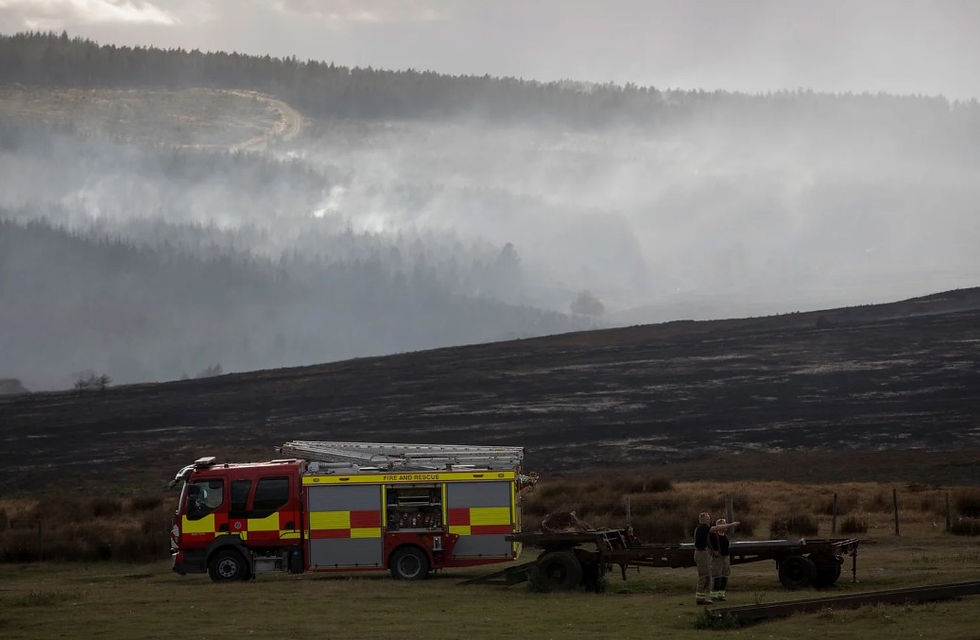
Photo by Scott Wicking
Quick summary
Fire services used 12,125 appliances at wildfires in England by August 2026, a record annual total.
Wildfires over 10,000m² rose 93% on 2025 and now make up 34.6% of all incidents.
Large wildfires averaged 204 a year from 2021 to 2025, up 47% on the previous decade.
The data strengthens the case for fuel management.
Newly-released government data reveals fire and rescue services used 12,125 appliances at wildfires in England between January and August 2026. That is already more than in any previous full calendar year in the government series.
The same provisional figures show 1,354 wildfires, including 468 that burned more than 10,000 square metres. Large fires, fire-service demand and hospital casualties have all increased sharply compared with the same period in 2025.
Weather, climate, ignition, vegetation and other factors all affect wildfire risk and they raise an important question for policy: as dangerous fire conditions become more frequent, are land managers being given enough scope to reduce the fuel available to burn?
The key figures for January to August 2026
1,354 wildfires were recorded in England, up 41% from 957 over the same months in 2025.
468 fires exceeded 10,000m², up 93% from 243.
12,125 fire-service appliances were used, up 63% and already above the previous full-year high of 11,511 in 2022.
17 non-fatal casualties required hospital treatment, compared with seven during the whole of 2025.
65 heathland or moorland fires exceeded 10,000m², already more than the 59 recorded during the whole of 2025.
The 2026 figures are provisional and cover only January to August. The Government also warns that they are likely to underestimate the true number of incidents because some fire and rescue services may not yet have submitted all records for July and August.
Large fires are becoming a bigger part of the total
Total wildfire numbers fluctuate considerably from year to year. The number and proportion of large fires provide another way to judge the scale of the problem.
Of the 1,354 wildfires recorded by the end of August 2026, 468 were over 10,000m². That is 34.6% of all recorded incidents.
Over the same period in 2025, 243 of 957 wildfires were over 10,000m², or 25.4%.
The longer-term comparison is also significant. England averaged about 140 wildfires over 10,000m² each year between 2011 and 2020. During the five complete years from 2021 to 2025, the average rose to about 204 a year, an increase of 47%.
Restrictions on controlled burning were introduced in 2021, so that dividing point is relevant to the policy debate. It does not demonstrate that the restrictions caused the increase but the figures do establish that the recent period has included substantially more large wildfires on average.
Fire services are committing more resources
The strongest change in the new figures is the demand placed on fire and rescue services.
By the end of August, 12,125 appliances had been used at wildfires in 2026. That is 614 more than the previous highest full-year figure, recorded in 2022.
Compared with January to August 2025:
pumping appliance use rose from 4,243 to 7,452;
water-supply appliance use rose from 364 to 666;
command, personnel and logistics appliance use rose from 1,373 to 2,300.
The number of appliances used per recorded wildfire also rose, from about 7.8 in 2025 to 9.0 in 2026.
Heathland and moorland: size matters more than incident numbers
The number of heathland and moorland wildfires has not risen steadily since 2021. The 2021–2025 average was 108 a year, down from 127 in 2011–2020. The size of the fires is the concern.
There were 65 heathland or moorland wildfires over 10,000m² by the end of August 2026. That already exceeds the 59 recorded during the whole of 2025 and is close to the highest full-year totals in the series: 68 in 2011 and 70 in 2018.
Nearly half of the heathland and moorland wildfires recorded in 2026 (65 of 137) were over 10,000m².
These national figures cover all land in the government's heathland and moorland category. They are not figures for grouse moors alone, or only for land covered by the burning restrictions.
More casualties are requiring hospital treatment
The latest data also show a rise in the human consequences of wildfire.
By the end of August 2026, 21 wildfires had involved casualties. There were 29 non-fatal casualties, of whom 17 required hospital treatment. Four were classed as severe, meaning they required at least an overnight hospital stay.
The 17 hospital casualties already exceed the previous highest full-year total in the series, which was 12 in 2018. One fire-related fatality was also recorded in 2026.
The numbers remain small compared with the overall number of wildfire incidents but they show that the consequences are not confined to vegetation, habitats or fire-service resources.
A changing climate makes fuel management more important
Climate change is increasing the likelihood of periods of dangerous wildfire weather. Hotter and drier conditions can leave vegetation more flammable and allow fires to spread rapidly once they start. That makes prevention more important.
Weather affects the conditions in which a fire burns. Fuel management affects how much vegetation is available to burn and how it is arranged across the landscape.
Land managers cannot alter the weather on a high-risk day. They can influence fuel loads beforehand.
There is no single technique suitable for every site. Carefully controlled prescribed burning may be appropriate in some places. Cutting, grazing and other vegetation management may be better elsewhere. The right approach depends on the vegetation, terrain, environmental designations and the risks being managed.
Restricting the practical options available to manage vegetation needs to be considered alongside the consequences of allowing combustible material to accumulate.
Wildfire policy must address what happens before ignition
The government statistics show that England is experiencing periods with large numbers of substantial, resource-intensive wildfires. That is significant for the way wildfire risk is managed.
As hotter, drier conditions increase the potential for serious fires, government policy should allow land managers to use the most appropriate method to manage fuel loads before an ignition occurs. That includes prescribed burning where it can be carried out safely and appropriately, alongside cutting, grazing and other measures.
Reducing wildfire risk requires attention not only to how fires are fought, but to the condition of the vegetation they encounter when they start.
Data sources
MHCLG Fire and Rescue Data Platform (FaRDaP):
The tables cover records that had reached FaRDaP by 4 October 2026. Figures for 2026 are provisional and may be revised as further records are received.


